
The weighing scale employees carry in their minds.
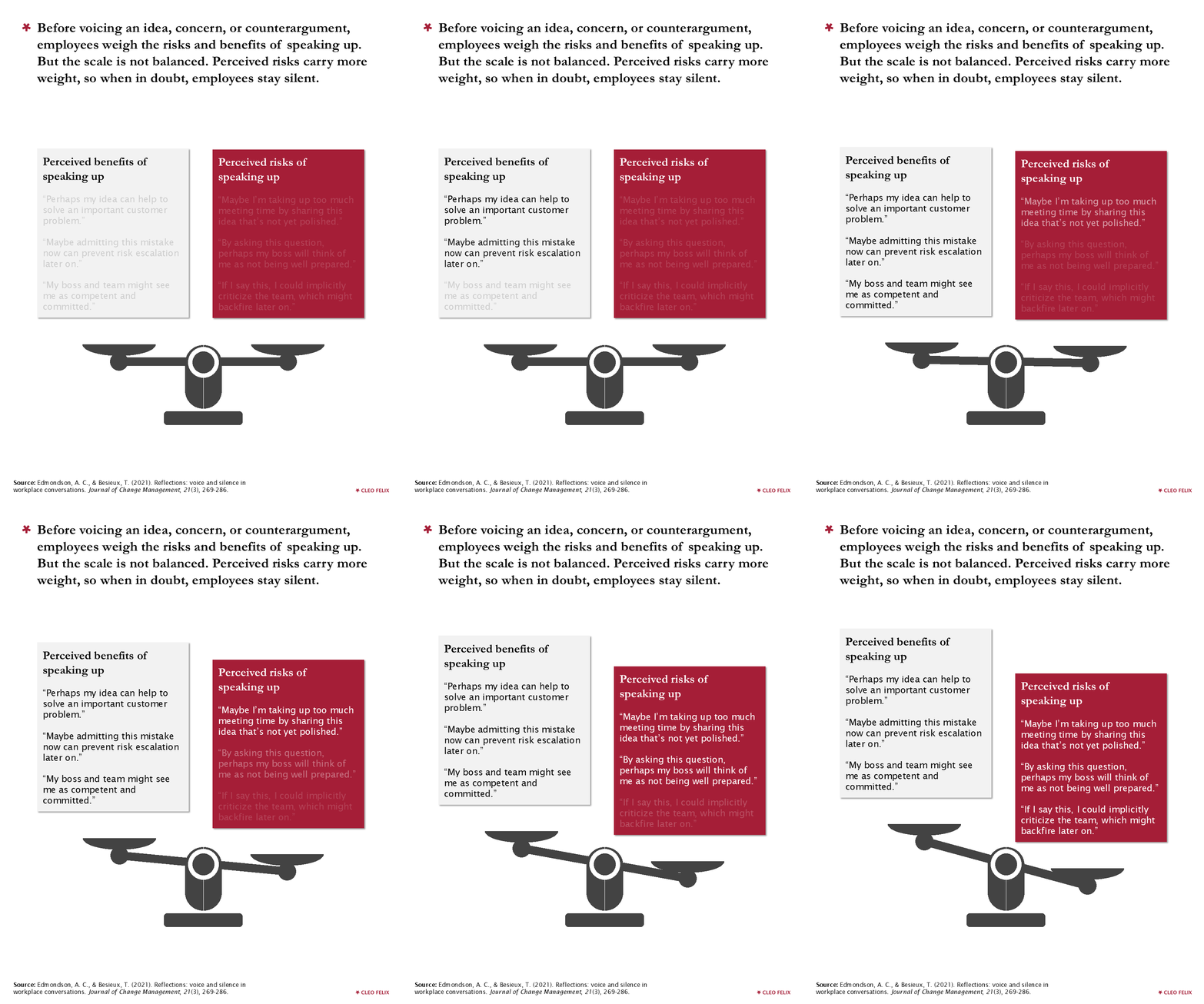
Picture: Psychological safety weighing scale
by Tijs Besieux, PhD
In the aftermath of the 1986 Space Shuttle Challenger disaster, NASA safety engineer Brian Russell reflected: “I wish so badly that I’d have just said ‘there is a dissenting view here'. Just to let them know that this wasn’t a unanimous decision.”
John Barnett, former quality engineer at Boeing, in a public hearing said: “After the merger [with McDonnell Douglass], when I raised my hand and said ‘we have a problem here, they would attack the messenger and ignore the message.” In this widely documented case, critical information about software risks failed to surface, contributing to two crashes in 2018 and 2019 that killed 346 people.
In 2023, the OceanGate submersible imploded, killing all five on board. Former quality engineer Antonella Wilby stated: “Anyone should feel free to speak up about safety without fear of retribution, and that is not at all what I saw. I was entirely dismissed.”
In all three cases, employees and customers suffered fatal consequences. In all three cases, one root cause fueled these nightmare scenarios. While people knew that things were off (launch conditions that were unsafe, software and training shortcuts, material unfit for extreme pressure), they decided to withhold or leave the company entirely as concerns were muted, dismissed, or abandoned.
At the core is a simple but powerful mechanism. Before speaking up, employees run an internal calculation: Is it worth it? They weigh the perceived benefits of speaking up against the perceived risks. And because risks carry more psychological weight than rewards, silence often wins.
Effective leadership shifts that balance. Not by asking for more openness, as that still provides no real evidence that you can speak up without facing retaliation, but by making it safer and more worthwhile to be open:
Responding constructively to dissent (example: “Thank you for bringing this up; I’m sure it wasn’t easy to put this on the table.”)
Rewarding candor, not punishing it (example: “I appreciate you being so straightforward. Everyone on this team is here to help deliver on our strategy, and we can only do so by bringing diverse insights to the table.”)
Treating concerns as contributions instead of threats (example: “I’m happy you’re flagging this now so we can address it accordingly. Maybe, if this were left unaddressed, it could have resurfaced tenfold in the future.”)