Why great leadership trainings rarely survive the workplace.
by Tijs Besieux, PhD
Imagine Valeria, innovation leader at 'BlueBuild', a midsize construction company. In her 360-degree feedback report, she learned that bringing clarity to company-wide change was definitely not seen as one of her strengths. And because Valeria is exceptionally skilled at innovating sustainable building products, BlueBuild decides to sign Valeria up for a three-day training course on "effective change communication" at a prestigious business school.
The training course is great, with highly influential professors sharing the latest insights into how leaders can communicate change effectively.
Valeria learns a ton of research-backed theories and models, and as the days go by, she feels more and more confident that she has taken a major leap in her ability to lead change across the organization, which she can benefit from when bringing innovation across the company.
Towards the end of day three, as a final exercise, one of the professors asks to take out a piece of paper and write down: "How will you translate the training learning to your day-to-day practice?"
Eager to start writing, Valeria suddenly finds herself stuck, unable to come up with many practical ideas to help the training lessons stick at work. And so, six months after the course, when Valeria's HR business partner checks in to see if the training 'paid off', Valeria signals that although the training itself was great and very inspiring, she encountered too many roadblocks at work for the lessons to land.
Here's why:
In the training, the professors often cited that effective communication around change should always start from the company's strategy. How does the company create value for its customers, and so how does the change that the company is about to implement allow us to create even more value for our customers? But Valeria realized the company's strategy is too vague and misses specific pieces of the puzzle (for instance, who are the company's valuable customers, and what capabilities must the company develop to stay ahead of competitors?) to build the change narrative on.
BlueBuild specifically rewards Valeria for the innovation she brings to the company, but focuses less on her ability to then also lead the change needed to implement such innovation. And so, even though Valeria is very motivated to take the innovation all the way from conception to company-wide implementation, when the workload increases, she tends to fall back on what she is rewarded for, namely, imagining what's possible over implementing what's needed for the customers.
If friction arises that blocks behavior, even the best training will likely not survive Monday morning.
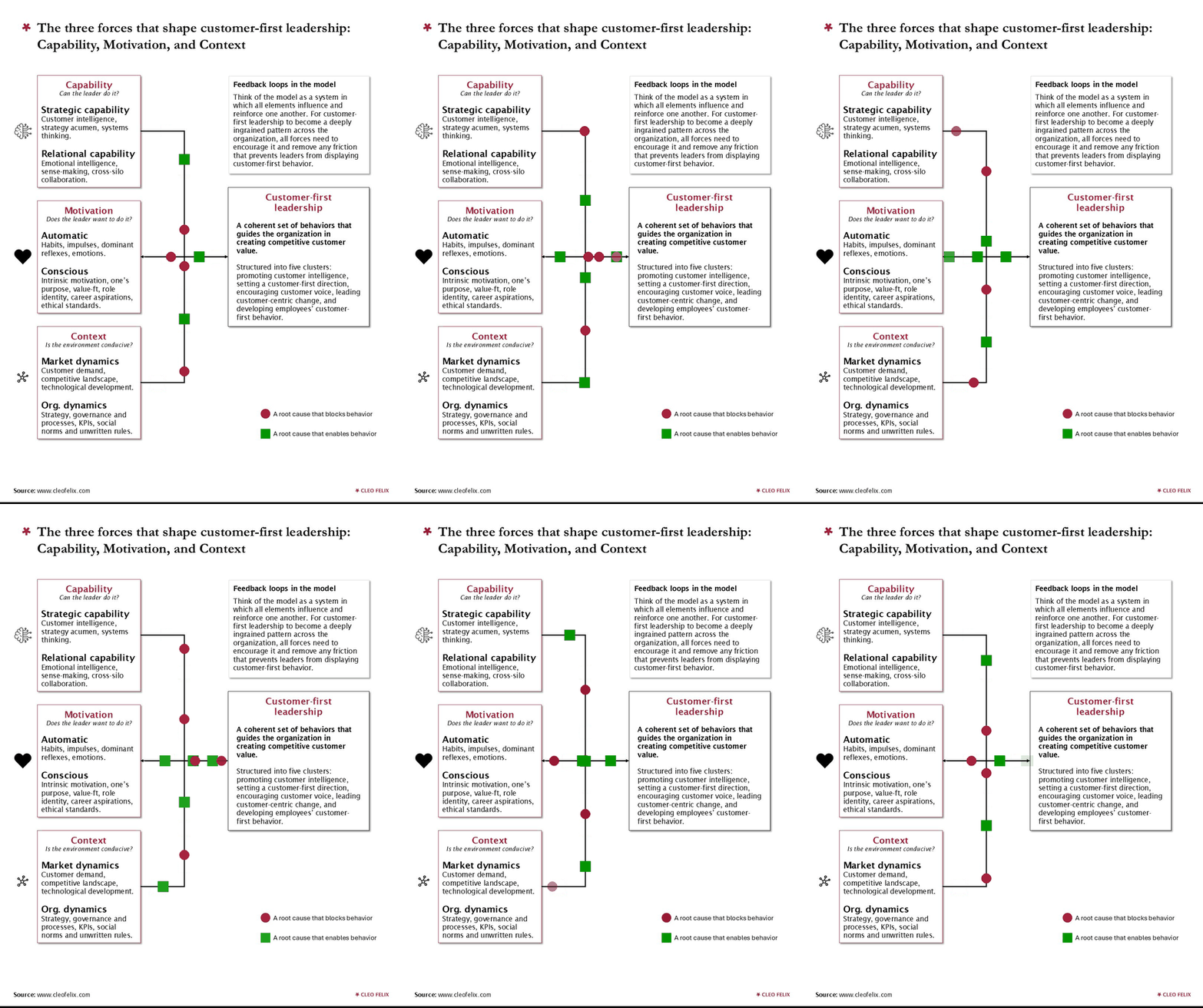
That's why leadership development efforts only pay off when envisioned through a systemic lens. In my work on enabling customer-first leadership, we work with the three major forces that shape leadership behavior: capability, motivation, and context.